Showing posts with label science. Show all posts

Thursday, May 10, 2007

City Slalom

Monday's I Can't Believe It's Science discussed a few recent "science-ish" articles including one by Richard Wiseman, a University of Hertfordshire psychologist, that found world-wide walking speeds have increased since the last such study in 1997.

I have no trouble believing that in our increasingly 24/7 society, where we're multitasking and trying to be in 3 places at once ,we've picked up the pace and are getting there faster than we did just 10 years ago. After all, 10 years ago, cell phones were big clunky things, blackberries were fruit that you ate and email was only good for sending around unix-based lewd jokes, or that 's what it was used for at my college at least... I feel so old.

The part of the article that surprised me was that New York City was only the 6th fastest city in the world. Working in midtown I think that we're fairly fast walkers, especially in the Rockefeller Concourse... if you're not careful you'll get flattened by some snooty-looking ad executive wearing 4 inch heels and through some miracle of biomechanics power walking to get to where ever ad executives have to go.

So although I was first surprised that Singapore (really? Singapore? Maybe they really are an Asian Tiger force to be reckoned with like The Economist says... those fast walking Singhs) had garnered first place, I soon recalled that not all those who walk in New York are (a) New Yorkers and (b) fast walkers.

To address these annoyingly slow walkers, Time Out New York, the obsessive guide to compulsive entertainment, took matters into their own hands. Dressing up like oversexed meter maids, they handed out tickets to individuals guilty of the following infractions:
  • Walking too slowly in a crowded area
  • Stopping in an inconvenient place
  • Blocking pedestrian traffic by walking side by side in a group of three or more
  • Irritating use of cell phone
  • Stopping at the top of the stairs in a subway station (Great quote from the article: "Where is Wooster? Hint: not at the top of the stairs")
  • Other (I think this category could be extended to the tourists who sling their H&M bags willy-nilly and who are generally recipients of the evil sidewalk eye*)

It seems clear to me that in order to be contenders for 2017's award for fastest walking city, New Yorkers are going to have to get serious about enforcement of the afore mentioned moving (or failure to move) violations. You can download your own spiffy citations like the one pictured at the link above. So get out there and show those annoying foot draggers that we won't stand for their leisurely strolls down 5th Avenue, or any other avenue!

*see evil subway eye

Thursday, April 26, 2007

Better Drinking through Science

Now this is the kind of science we should be supporting more of! According to Seed Magazine, Robert MacPherson, a mathematician at the Institute for Advanced Study in Princeton, New Jersey, and David Srolovitz, a physicist at Yeshiva University, New York have discovered why some beers holds their head and others do not.

Surprisingly, the degree to which a beer holds its head is not directly correlated to the blood alcohol content of the beer's dispenser, as I had always suspected. But, according to Seed Magazine:


"Beer foam is a microstructure with complex interfaces. In other words: a cellular structure comprising networks of gas-filled bubbles separated by liquid.

The walls of these bubbles move as a result of surface tension—and the speed at which they move is related to the curvature of the bubbles. As a result of this movement, the bubbles merge and the structure coarsens,” meaning that the foam settles and eventually disappears."

Ostensibly, the difference in Lager and Stout, aside from the obvious differences in taste, lies in variations created either by the liquid surrounding the bubbles or by the gas filling the bubbles. My money's on the gas since I know (from meticulous pub-based research) that Guinness taps require a nitrogen source and other beer taps just require regular carbon dioxide.

On a related note, just to show you the difference between Nature, where MacPherson and Srolovitz's work was published yesterday and Seed Magazine where I just read about their paper, I saw the citation below on my weekly email table of contents from Nature and thought, "Yawn, who cares about von Neuman relations and microstructures." Of course I failed to read the last line in the summary. Contrast that with Seed's catchy headline, "Head Start: Scientists Crack Beer-Froth Enigma," all I can say is "thank God for science writers, Nature should consider hiring some!"

To recap:

Guiness and Budweiser are inherently different


Boring:

"The von Neumann relation generalized to coarsening of three-dimensional microstructures"
(Nature Volume 446 Number 7139 p1053)

Over 50 years ago, von Neumann derived an exact formula for the growth rate of a cell in a two-dimensional cellular structure. Now the extension of this result into three (and higher) dimensions has been found. The formula could lead to predictive models for various industrial and commercial processing scenarios, such as controlling the head on a pint of beer.
Robert D. MacPherson and David J. Srolovitz


Cool:


Tuesday, April 03, 2007

Stanford, Schmanford!

Who needs to move their lab to California now that New York's approved stem cell funding? As reported yesterday in ScienceNOW (the petulant child of science journalism most recently overheard tantruming, "I want my science and I want it NOW!") on Friday March 31st, with moments to spare before FY08 began, NY state legislators passed the state's budget including 100 million dollars for stem cell research in New York state.

Why New York state begins its fiscal year in April, I don't understand, probably along the same lines as why commuters must listen to their iPods at levels audible to passengers around them. Annoying, but in the end only hurting themselves.

So what does the 100 million dollars mean for New York researchers? Mainly, it means that because of lack of federal funding, the U.S. will continue to develop patchwork funding and therefore uneven regulatory policy for stem cell research. This is concerning because although funding stem cell research on a state-by-state basis may alleviate the short-term problem of low public funding for this research, it ignores the long-term problem that the U.S., as a nation, is rendering itself uncompetitive with other countries who have approved government funds for stem cell research country-wide.

If all researchers who wanted to conduct research on human embryonic stem (ES) cells resided in California, New Jersey, New York and a few others who are considering allocating state funds to supporting this research, there would be no problem. However, since biomedical research takes place in virtually every state in the nation and stem ce
ll researchers are the new "It Scientists" this research should be happening everywhere. Though due to the lack of federal funding, it can only happen where state or private monies are available. This gives certain states a competitive advantage, but may hinders research cooperation overall.

To take a step back, the national policy on stem cell research was set by President Bush by Executive Order (EO) in August 2001 when he said that existing human ES cell lines could be used for government funded research but that no newly created stem cell lines could be used for federally funded research.

There were two main problems with this approach. The first was that most biomedical research is federally funded. The National Institutes of Health (NIH) boasts a 28 billion dollar a year budget including 15 million to support biomedical research at extramural (outside of the NIH campus). Additionally most academic researchers at top-tier research institutions receive most of their funding from the NIH. So by disallowing research using federal funds on newly created stem cell lines, the president was essentially putting a stop to research on new stem cell lines. Since then, new mechanisms of private funding for stem cell research have emerged, but no where near the scale of NIH funding.

The second problem with Bush's 2001 EO approach was that the existing human embryonic stem cell lines were no great shakes. Before researchers purified human ES cells, they started with a more laboratory friendly mammalian system, and purified Murine (mouse) ES cells. ES cells can't survive on their own, however, and must be grown on a so-called "feeder layer" of cells that provide nutrients and support to the ES cells. Since Murine ES cells were first purified, Murine feeder layers were readily available to provide support to the first human ES cells purified. At the time that Bush announced his 2001 EO, the only human ES cells available were grown on Murine feeder cells and thus not a therapeutically useful human ES source. (Why? because mice aren't people... nuff said)

So to bring the discussion back around to New York State's well-intentioned 100 million Empire State Stem Cell Fund, I say kudos to New York State, your stem cell researchers won't defect across the Hudson to New Jersey or across the country to California.

But the overarching problem hasn't been solved. In the absence of a permissive federal policy on funding human ES cell research, the patchwork state-by-state regulation discourages collaboration and may end up hampering research.

Tuesday, March 27, 2007

Dark Matter

I love the Science Times. If it weren't for the newsprint that gets all over my fingers and adds to the general feeling of disgustingness I have when I arrive at work I would pick it up every Tuesday on my way to the subway.

Instead I try to read it online, and today I'm glad that I did.
This article discussing what happens when grad students go crazy and kill their professors highlights the uncomfortable experience of being beholden to your advisor and having your success, and at times entire happiness, wrapped up in his or her approval.

And advisers aren't always the most humble or encouraging of individuals. One faculty member I knew in grad school would force his students to prepare posters for national meetings and departmental retreats on nights and weekends and then would randomly pull their presentations from the agenda with little or no explanation.


The sad part? He was a really nice guy to the grad students who weren't in his lab; we had no idea what a jerk he was until one of our classmates joined his lab.

The really sad part? He was given tenure and continues to oppress and mistreat his lab members to this day.

If the tenure system rewards people like that, why would someone who's decent and treats his or her students well ever want to be a faculty member? Search me! But luckily I worked with one.

My advisor was a relatively new faculty member when I joined her lab in the last millennium. She got to know her lab members, invited us to her house for parties and took us out for lunches to celebrate successful paper and grant submissions.

But she's definitely in the minority, though for the life of me I can't understand why. Much as I was troubled by the reports of violence against PhD advisers in the Times article today, after viewing life in other labs at my graduate school and others, I think the tenure system provides no incentive to treat graduate students any better.

Tuesday, February 27, 2007

Badges? We Don't Need No Stinkin' Badges!

Once again, Interplanetsarah has provided me with a funny take on science and scientists. What if, instead of publishing papers in peer-reviewed journals, we had to accrue a number of merit badges in order to advance to the next stage of our career?

The
Order of the Science Scouts of Exemplary Repute and Above Average Physique has provided a mechanism to do just that. I've earned a number of these badges, but share a few anecdotes on my favorites here.


The "talking science badge" goes hand-in hand with the blogging science badge for me. A favorite story about explaining science to non-scientists comes from the 2003 Drosophila Annual Meeting that was held in Chicago. As thousands of Drosophila biologists descended upon the hotel, two business types sat in the hotel bar looking slightly bewildered. Being the friendly gal that I am, I said "Hello" giving them the opportunity to ask just what the heck these badly dressed people were doing wandering around the hotel wearing badges decorated with flies? I explained that the flies were Drosophila melanogaster and that they were one of the oldest and most effective model organisms around. I explain that scientists at this meeting were studying everything from Diabetes to Neuron Regeneration to Cancer. They nodded, looking around with a new appreciation for the crowd surrounding them (because if Drosophila biologists know how to do anything, it's congregate at a bar!). I like to think that informal conversations like that one are just as helpful as Scientific American or Nova.


The "I may look like a scientist but I'm actually also a ninja" badge is one that every scientist should aspire to hold, particularly since it is purported to be lethal in combination with the "destroyer of quackery" badge. While the badge is aimed at those who manage to seek out and dispel junk science masquerading as real science, I've actually been recruited to be a ninja... a science policy ninja! The details are unimportant and too closely tied to my identity, which I try to keep well-separated from this blog, but the basic story was this: when I was working in a federal agency in Washington, DC, the deputy director of a neighboring office complained about his neighbor who kept taking the trash out at ungodly hours and banging around in the alley that their houses shared. So the deputy director proposed that we make like ninjas and steal his neighbor's garbage cans. We never did, but the ninja joke was a running one between us. Does that count? I think so!

Finally, kudos to David Ng, creator of the OSSERAAP and author of the hilarious and (in my mind) unoffensive (others disagree) Jeans Versus Genes: the Ultimate Scientific Discourse.

Wednesday, January 17, 2007

Celebrities and Science

I realized in December that of all the RSS feeds I have littering my personalized Google home page, I was clicking to read New Scientist more and more frequently. Sure, I love the Seed Daily Zeitgeist, but for unique, provocative content, New Scientist won hands down. So I got a subscription... as if I need more magazines to read! But in perusing the first issue (January 6-12) I was not disappointed. There on page 5 was a short piece that made me smile and feel that the world might just become a better place.

The article reported that a UK charity,
Sense about Science (SAS), launched a campaign earlier this month encouraging celebrities to promote scientific accuracy in their comments to the media. They've even developed this handy pamphlet debunking some of the most common misconceptions celebrities perpetuate about the importance of "natural food" and the danger of immunizing children. They also have a phone number celebrities can call to check information before making a statement in public.

But what makes misrepresentation of science so insidious is that most incorrect statements pass the "straight face test" and even sound plausible. The scientific community needs their own celebrities: charming, well-respected scientists who will speak out against public misconceptions and set the record straight.


What makes this difficult, however, is the very nature of science as a constantly evolving, theory-based way of assessing knowledge. The fact that the FDA said in December that eating meat from cloned animals is safe doesn't mean that 5 years from now, they may believe differently. However, by today's standards of food safety, eating this meat is just as safe as eating any other type of meat.

Perhaps the root of the problem with celebrities misrepresenting science lies the very basic fact that the general public does not understand science and thus does not have as well-developed a "BS Filter" when it comes to scientific misrepresentations. Or perhaps we, as a society, have simply grown incurious as information is delivered to us in increasingly well-digested, bite size pieces. Even I shy away from overly-long news articles; the one on celebrities and science was after all only 171 words long.

Monday, January 08, 2007

Stem cells... Get Yer Stem Cells!

In a surprising paper announced for publication in Nature Biotechnology this week, scientists at Wake Forest School of Medicine (Go Deacs!) and Harvard School of Medicine claim to have purified human embryonic stem cells from amniotic fluid. (See report in Scientific American at: Science & Technology at Scientific American.com)

Why, you may wonder (if you wonder about such things at all), is this discovery any more important or any less controversial than previously documented methods of isolating stem cells from human embryos? There are a few reasons:

1. Amniocenteses are an extremely common procedure generally used in mothers over 35 to diagnose chromosomal abnormalities such as trisomy 21 (Downs Syndrome) and other gross chromosomal abnormalities. The procedure uses a long needle to extract amniotic fluid (the fluid surrounding a fetus) and does carry some risks to the pregnancy, but is nonetheless a common procedure.

2. The stem cells which authors estimate make up 1% of all cells in amniotic fluid do not appear to be required for embryonic development; these cells have been sloughed off or otherwise discharged from the embryo and float around in the amniotic fluid. This may prove to be a critical difference for individuals who believe that the current practice of generating human stem cells, removing them from the inner cell mass of early stage embryos, is tantamount to murder. The presence of stem cells in the amniotic fluid means that they are not being removed from the actual embryo, perhaps sidestepping certain religious and ethical objections.

Are these stem cells as good as the ones that have been previously isolated? So far it appears that these stem cells have the ability to differentiate into the three main tissue types: ectoderm, mesoderm and endoderm from which all organs and tissues are made. The challenge, should this source of stem cells be proven to be as reliable as the inner cell mass, is to understand the growth factors and signals these cells require to differentiate into adult tissue types.

Perhaps such a benign source of embryonic stem cells is just what the field needs to escape the political rhetoric that currently circumscribes its research.

Thursday, December 21, 2006

Potty Talk

In keeping with the childish theme of rewriting Christmas Carols, I read over on New Scientist that there's a particularly egregious and difficult to stem form of environmental pollution in which we are all engaged.

Using the potty.

According to the article, "Despite making up only 1 per cent of the volume of waste water, urine contributes about 80 per cent of the nitrogen and 45 per cent of all the phosphate. Peeing into the pan immediately dilutes these chemicals with vast quantities of water, making the removal process unnecessarily inefficient."

The article goes on to describe (in a lot of detail) the sewage disposal system and how, unless you're a green European you're pretty much destroying the environment one flush at a time.

The only part I'm unclear on is once you've separated the urine from the "grey and black water" (eww!) and put it into tanks where "microbes" break down the nitrogen and phosphorus, what are the actual by products of this whole effort? According to the
diagram on the website, the "sludge" (again eww!) is either brought to a landfill or incenerated. Isn't that contributing more methane (a potent greenhouse gas) to the atmosphere? What they really need are the methane convertase bacteria which I suspect we'll find any day by a hydrothermal vent in the deep ocean.

So just in case you were feeling self righteous about driving your Prius or not even owning a car (like me) remember that you're no different from that Hummer driver, every time to pop a sqat.

Monday, December 04, 2006

Heroes: a mid-season entertainment and scientific analysis

The first half of the first season of Heroes has just completed. And I just have to say Wow! and Whew! Never have I been so riveted to a show waiting with baited breath as the talented actors, writers and director delivered high-quality, entertaining, thought-provoking shows from one week to the next.

Well never since I started watching Lost. But this post is about Heroes and will not dissolve into a whiny rant about how much better the first season of Lost was and how the writers have no idea where they're going... you can go to any of the TWOP Lost Forums for that...


I won't attempt to recap last night's episode, Erin over at TWOP has been doing a fine job with that, but just want to offer some commentary on what's known, unknown and the minor annoyances this show has brought me, as a geneticist.

Where we've been
Up to this point most of the episodes have focused the phrase, that I feel compelled to whisper every time I even think about watching an episode of Heroes, "Save the Cheerleader, Save the World!" It was totally creepy when Future-Hiro first announced it to a stunned Peter Petrelli in the frozen NYC subway. (For the record, Peter totally got the evil subway eye from Mohinder for spouting that "but didn't you see him? I mean time just STOPPED, and there way this guy with a sword" crap) And now? Peter has saved the cheerleader, but based on the last 5 minutes of last night's show, he's the bomb (or da bomb!). Which is odd since we've already met Radioactive man, Sprague, who melted his house and gave his wife cancer. Tim Kring has also stated in a TV Guide Interview that "we'll posit another theory that [the nuclear bomb] is Peter [Milo Ventimiglia]." so it's not entirely clear to me whether it's really Peter or Sprague who's da bomb... though Peter's definitely hotter

One refreshing attribute of Heroes remains the transparency with which the shows actors and creators relate to fans and the media. From Greg Grunberg's spoilery interview with Michael Ausiello (follow the link and see video links on the right) to Tim Kring sitting down to talk to various news sources, it's clear that the Heroes writers and cast don't mind revealing plot points ahead of the episode's air date. That keeps the fans (the same ones who are snarkily posting that Lost writers have no direction) happy. Hopefully Kring and cast will continue this practice, since, even though I'm not a snarky fan, it makes me happy too!


What we still don't know
The great thing about Heroes so far is that they're wrapping up some mysteries (Six Months Earlier is a good example) while they introduce others (like who was HRG taking his "marching orders" to keep Sylar alive from?). Also falling into the column of "what we don't know" would be why Sylar didn't immediately break out of his holding cell at the Make-Believe Paper Company. Why did he wait until Eden came to kill him? Did self-preservation motivate him to be super-duper powerful or was he just toying with them all along? Also, why does the Haitian want to keep Claire's memories intact? Does he know that the s**t is going to hit the fan in the form of da bomb or is he just tired of being HMG's mind wipe bitch? Needless to say, there are still plenty of mysteries to be unraveled when the show returns on January 22nd.


Minor annoyances
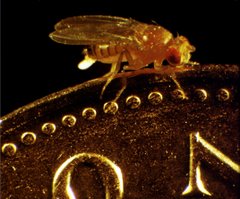
The geneticist in me (yes, the one that loves fruit flies laying eggs on pennies) has trouble buying the premise that based on mutation(s) in the Heroes' DNA Dr. Chandra Suresh is able to track the heroes down geographically. First of all, this sort of tracking would require access to a massive database containing the sequence of every individual in the world's DNA (or at least a sample of it). No such database currently exists, and even if it did, Suresh would have to obtain prior informed consent from the individuals whose DNA he tests in order to test for the presence of the mutation(s). I might add that such prior informed consent would probably be easy to obtain from Sylar who was determined to be different and special but would likely be difficult to obtain from such reluctant heroes as Nathan Petrelli, Claire Bennett and Sylar's first victim (the telekinetic guy who wanted to get rid of his power to avoid hurting anyone - yea, that didn't turn out so well). The whole question of privacy and mining of DNA databases is a huge ethical issue that policy makers both in the U.S. at NIH and through international organizations such as OECD and WHO are wresting with. It might be interesting for Heroes to give Mohinder a plot line where he has to convince some international organization that free and open access to genetic databases is necessary to preserve the world. At any rate, it would give him something to do besides the annoying voiceovers.

Finally, just a quick eulogy for Eden. Nora Zehetner brought Eden (aka Stinkerbell) from a girl who had defined her own morality through mind control, convincing cops to eat doughnuts rather than arrest her to the hero who helped Issac recover from his heroine addiction and who made the ultimate sacrifice by taking her own life so that Sylar could not obtain her power of persuasion. We'll see you in flashbacks, Eden.


Courtesy of Tombstone Generator


Friday, December 01, 2006

Fix That Data!

Ironically, in the same issue of Science magazine where editor-in-chief Donald Kennedy summarized actions taken by Science to improve its editorial process in the wake of the Korean Human Cloning Scandal, a new scandal has been reported. This time scientists in a Missouri lab allegedly falsified data published in the February 17th issue of Science where they claimed that key cell fate decisions made in the early mouse embryo occur at the very first cell division.

Mah, you may say, so what? So plenty! The determination of anterior-posterior polarity in the embryo is, frankly, what keeps your head out of your ass. Those individuals who choose to realign their body plans later... well that's a personal choice.

The key observation in the February 17th paper was that one of the cells produced in the first cell division of a fertilized mouse egg expresses higher levels of the Cdx2 transcription factor (a class of protein that controls the expression of other proteins) than the other. This initial difference could help explain why certain cells in the mouse embryo are better for generating clones than others.

And now? Not so much. It turns out that the observation that Cdx2 is higher in one mouse cell than the other is fairly easy to fake using Photoshop, or Correl Draw or any of the other common tools embryologists use to prepare their microscopic images for publication. This is not only unrepresentative of the actual data but also tantamount to lying about the results.

Falsification of data is wrong. It's also pretty dumb since the first thing that competing labs do once a paper is published is to try to replicate the results. If they can't get the experiment to work, and they're a hot shot lab themselves, the fraud will be uncovered pretty quickly.

But even if uncovered expeditiously, the cost of fraud is great: in the time of the reviewers, the time of the journal editors, the time of the scientists both perpetrating the fraud and uncovering the fraud. And when you're an academic researcher, the tax payers are footing the bill for all of that time.

So who bears the responsibility for scientific misconduct, as the policy wonks are calling it? With the exception of Woo Suk Hwang's very public denouncement by the global scientific community, it's generally not the lab head, or as they are called on grants, the Principle Investigator (PI). Generally, the blame falls on lower level scientists, often postdoctoral fellows (PhD scientists in an apprenticeship position with the PI) or in some cases the graduate student pursuing a PhD with the PI.

These lower level scientists often carry out the experimentation and are in direct contact with the data. However, a laboratory is led by the PI and there should be some accountability by the management of the lab for transgressions that happen within it. The PI's name is on the grants and is generally the last author on the peer-reviewed publications, and thus should be held accountable.

So why is this not a common practice?

It's no secret that PI's are given little, if any guidance on how to run a lab. Most are thrust from their positions as postdoctoral fellows directly into positions as a lab heads. They receive little mentoring, and no management training as if running a lab were as instinctive as flying south for the winter. Some inroads have been made to this problem, such as the Howard Hughes Medical Institute Guide to Scientific Management and the UC Davis Laboratory Management Institute but management training should become a more mainstream part of scientists career development. (If you think that ANY career development would be an improvement over what they've got now, I'm with ya!)

Perhaps with better management practices in place, including frequent meetings and structured oversight of lower level scientists, misconduct would be less easily hidden from the PI's. And perhaps fewer PI's would suffer from the anterior-posterior realignment to which I referred earlier.